
When companies and individuals talk about “going green,” two terms often come up: RECs (Renewable Energy Certificates) and carbon credits. Both are tools to support environmental sustainability, but they work in very different ways. Here’s a simple breakdown to help you understand what they are, how they differ, and why it matters.
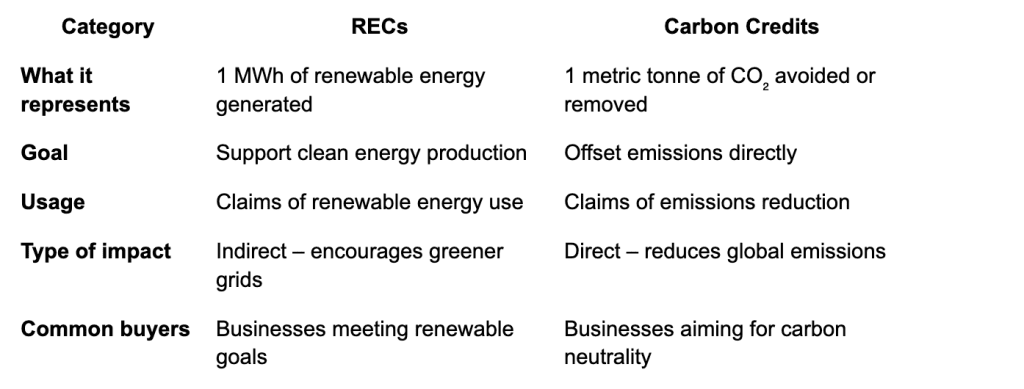
RECs, or Renewable Energy Certificates, represent the environmental benefits of generating one megawatt-hour (MWh) of electricity from a renewable energy source like solar, wind, or hydro.
When a renewable energy facility (like a solar farm) produces electricity, it generates two products:
The physical electricity
The environmental attribute of that clean electricity, this is the REC.
RECs allow buyers, whether individuals, businesses, or governments, to claim they are using renewable energy, even if the electricity powering their operations comes from the traditional grid. This system encourages the production of green energy by giving renewable producers a way to earn additional income.
Carbon credits (also called carbon offsets) represent the reduction or removal of one metric tonne of carbon dioxide (or equivalent greenhouse gases) from the atmosphere.
These credits are created by projects that prevent, reduce, or capture emissions, such as reforestation, methane capture from landfills, or carbon capture technology. By buying a carbon credit, you’re essentially funding these projects to offset emissions elsewhere.
This system is often used by companies to meet carbon neutrality goals by offsetting emissions they can’t eliminate internally.
In short:
RECs are about encouraging cleaner electricity generation.
Carbon credits are about reducing the amount of carbon in the atmosphere.
RECs and carbon credits serve different but complementary purposes in the fight against climate change. While RECs help transition our power grids to renewables, carbon credits fund real projects that absorb or avoid emissions.
Understanding the distinction helps companies and consumers make informed decisions. Whether you want to support clean energy, offset unavoidable emissions, or do both, knowing how RECs and carbon credits work is the first step to making a real impact.
You May Also Find This Helpful :
Explaining GreenHouse Gas (GHG) Emissions and Its Impact
Paving Malaysia’s Path to Sustainability with TPA
Carbon: The New Currency Powering Global Trade
The top 5 benefits of RECs for businesses and consumers
How Commercial Solar Drives Corporate Sustainability in Malaysia
Let our specialists assess your energy needs and recommend the ideal solution. Simply share your details, and our team will be in-touch shortly.