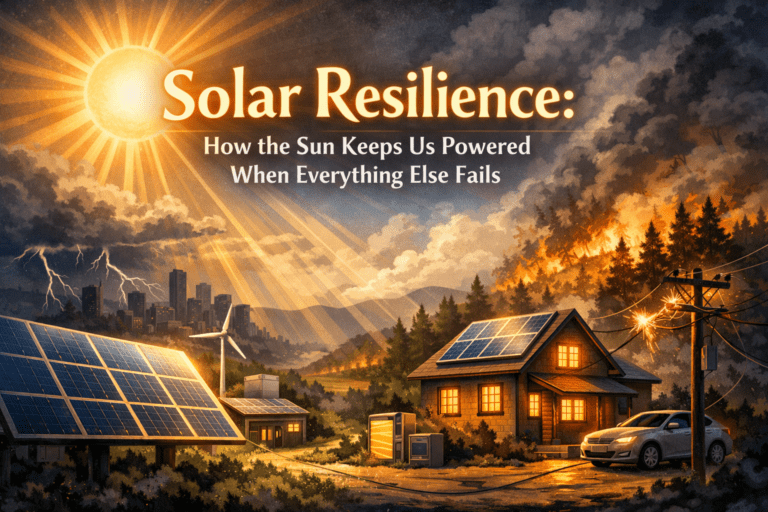
Energy resilience is about reliability. It means having access to power even when the grid is disrupted by extreme weather, technical failures, or unexpected demand. As climate events become more frequent and electricity systems face increasing strain, resilience is no longer a niche concern. It is becoming a core requirement of modern energy systems.
Solar power, especially when paired with battery storage, plays a growing role in making homes and communities more self-reliant. Instead of waiting for centralised grids to recover, solar allows electricity to be generated and used locally when it is needed most.
Traditional electricity systems rely on central power stations and long transmission lines. When one part of the system fails, large areas can be left without electricity. Energy resilience shifts this model by reducing dependence on a single source.
With rooftop solar and battery storage, electricity is produced at the point of use. Homes can continue operating independently for hours or even days, depending on system size, battery capacity, and energy consumption. At a community level, shared solar systems and microgrids allow essential services to continue functioning even if the wider grid is offline.
This decentralised approach reduces vulnerability and shortens recovery time during disruptions.
Solar panels alone generate electricity only when the sun is shining. Battery storage is what turns solar into a true resilience solution.
During normal conditions, excess solar energy generated during the day is stored in batteries. When the grid goes down, this stored energy can power essential loads without interruption. This is especially important during extended outages caused by storms, floods, or heatwaves.
In Malaysia, low-voltage battery systems are typically sufficient to support essential loads such as lighting, refrigeration, internet connectivity, and basic appliances. High-voltage battery systems, on the other hand, are capable of powering larger loads or even an entire premises, depending on system design.
To achieve longer backup duration, homeowners and businesses need larger storage capacity, not just higher voltage. Battery size directly affects how long essential systems can remain operational during a prolonged outage.
Modern battery-backed solar systems are designed to respond automatically when a blackout occurs. The system isolates the property from the grid and switches to backup power within seconds.
Typical priority loads include:
By selecting only essential circuits for backup, stored energy is used more efficiently. This targeted approach extends battery runtime and improves reliability during longer outages.
Grid disruptions in East Malaysia have highlighted how vulnerable centralised electricity systems can be. During major outages in Sabah, communities experienced prolonged power loss while waiting for grid repairs across challenging terrain.
In situations like this, decentralised energy systems such as rooftop solar with battery storage or community-scale microgrids can restore power far more quickly. As long as local panels, batteries, and internal connections remain intact, electricity can resume without waiting for large-scale transmission infrastructure to be repaired.
These experiences show that energy resilience is not just about convenience. It supports emergency response, protects livelihoods, and reduces the wider social and economic impact of outages.
As electricity demand increases and climate-related risks intensify, power disruptions are likely to become more common. Solar resilience offers a practical way to adapt.
By combining solar generation, battery storage, and local energy management, homes and communities gain greater control over their power supply. Instead of being fully dependent on external systems, they become active participants in their own energy security.
Solar resilience is not only about surviving failures. It is about building an energy system that is stronger, more flexible, and better prepared for uncertainty.
Visit the TERA website to explore trusted installers and financing options tailored to Malaysian homeowners and businesses.
Have questions? Reach out via WhatsApp at +60-197502386 or email [email protected] to start your solar journey today.
You May Also Find This Helpful :
Battery Energy Storage System (BESS): Storing potential for a greener future
Everything you need to know about EV Wall Box
How climate and weather patterns affect solar power in Malaysia
How smart homes unlock the full potential of rooftop solar
Let our specialists assess your energy needs and recommend the ideal solution. Simply share your details, and our team will be in-touch shortly.