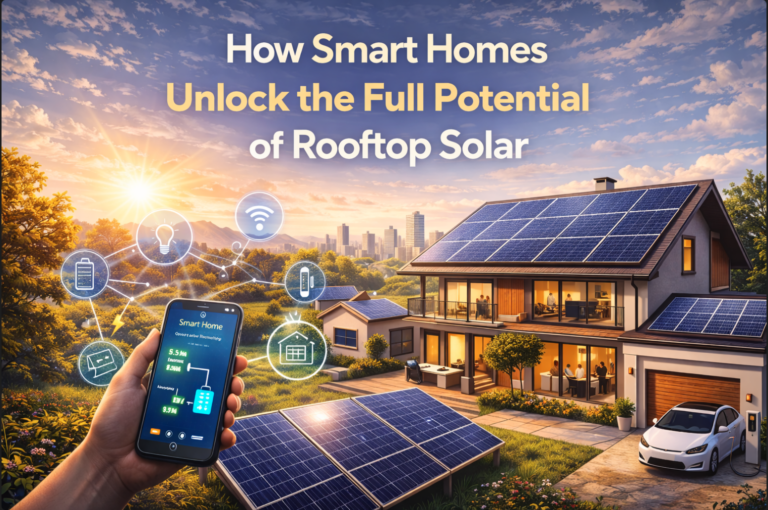
The way Malaysians power their homes is changing. Rooftop solar panels are no longer just about generating electricity. When combined with smart home systems, batteries, and connected devices, solar becomes part of an intelligent energy ecosystem that actively optimises how, when, and where electricity is used.
This shift is becoming increasingly relevant in Malaysia, especially with rising electricity costs and the introduction of time-based tariffs. Together, solar and smart homes are reshaping what energy efficiency looks like in daily life.
Traditional rooftop solar systems focus on one primary function: producing electricity from sunlight. Smart homes add a second layer by turning energy into something that can be measured, automated, and controlled in real time.
Smart inverters, home energy management systems, and mobile apps allow Malaysian homeowners to see:
This visibility becomes especially important under Malaysia’s RP4 tariff, which introduce a new electricity pricing structure, effective July 1, 2025, to December 31, 2027, that replaces the old system with voltage-based categories (Low, Medium, High) and itemized charges (energy, capacity, network, retail) for greater transparency, featuring incentives for lower usage and a new Automatic Fuel Adjustment (AFA) for cost fluctuations, with an average base tariff of 45.40 sen/kWh.
Essentially, this means instead of consuming power blindly, households can now make informed decisions about when to use electricity, when to store it, and when to avoid drawing from the grid during higher-priced peak periods.
Home battery storage systems take solar efficiency further by storing excess electricity generated during the day for later use. In Malaysia, this is particularly valuable for evening hours when solar production drops and grid tariffs may be higher.
When paired with smart software, batteries do more than just store energy. They can:
As a practical reference, a small 6 kWh home battery can typically power essential appliances such as lighting, fans, Wi-Fi, refrigeration, and basic sockets for around 8 to 12 hours, depending on usage. This makes battery systems relevant not only for savings, but also for resilience.
Smart homes allow appliances to align their operation with solar generation rather than fixed schedules. Appliances can be programmed to run when solar output is highest, usually between late morning and mid-afternoon.
In a Malaysian household, this can include:
This coordination reduces dependence on grid electricity during peak periods while maximising the value of every kilowatt generated on the roof.
One of the biggest changes brought by smart solar systems is accessibility. Homeowners no longer need technical expertise to manage their energy usage.
Mobile apps now present complex data through simple dashboards, showing:
Some systems also provide alerts, usage insights, and automated rules that continuously fine-tune energy use. Over time, these insights help Malaysian households adjust habits, reduce waste, and better adapt to peak and off-peak pricing structures.
At the centre of smart homes is the Internet of Things (IoT). Sensors, meters, and connected devices communicate with one another to balance comfort, convenience, and efficiency.
In practice, this means:
When integrated with rooftop solar, IoT allows homes to respond dynamically to sunlight availability, occupancy, weather conditions, and electricity pricing.
While lower electricity bills are a clear benefit, the impact of smart solar homes extends further. These systems help:
As Malaysia continues its energy transition and electricity pricing becomes more dynamic, smart solar homes act as both consumers and contributors to a more flexible and decentralised energy system.
Rooftop solar panels were the first step towards home energy independence. Smart technology is the next.
As batteries improve, apps become more predictive, and devices grow more interconnected, Malaysian homes will increasingly operate as self-optimising energy hubs. Electricity shifts from being a fixed monthly cost to a system that adapts, learns, and works quietly in the background.
The combination of solar and smart homes is not just a technological upgrade. It represents a change in how households interact with energy, especially in a future shaped by time-based tariffs and rising demand.
——
Thinking of going solar? Visit the TERA website to explore trusted installers and financing options tailored to Malaysian homeowners and businesses.
Got questions? Reach out via WhatsApp at +60 19 750 2386 or email [email protected] to start your solar journey today.
You May Also Find This Helpful :
Everything you need to know about EV Wall Box
How solar energy is changing the way we design homes
Solar gadgets to consider for 2026 and beyond
Solar resilience: how the sun keeps us powered when everything else fails
How solar, batteries, and smart systems work together
Solar ATAP 2026: What Homeowners Need to Know
Let our specialists assess your energy needs and recommend the ideal solution. Simply share your details, and our team will be in-touch shortly.