
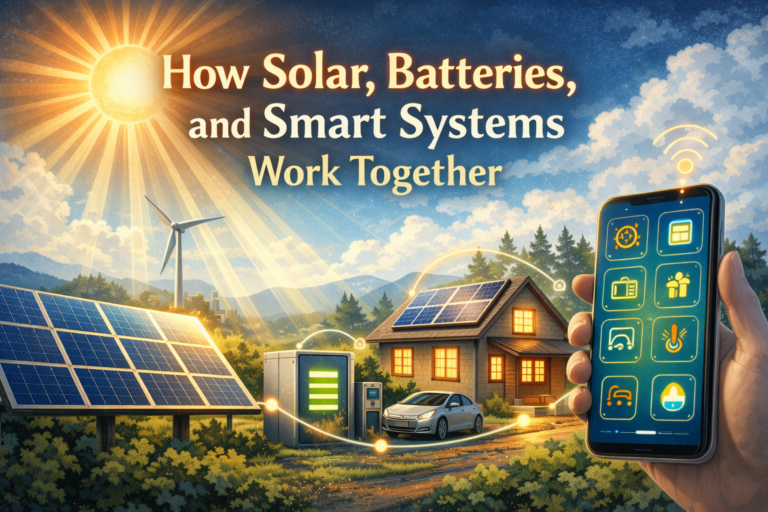
Solar resilience is not driven by a single component. It comes from several technologies working together as an integrated system. Each part plays a specific role in ensuring electricity remains available during normal conditions and when the grid fails.
Solar panels are the starting point of the system. They convert sunlight into direct current (DC) electricity throughout the day. Even during cloudy weather, panels continue to generate power, although at reduced levels.
For resilience, panel placement and system sizing matter. A well-sized array ensures enough electricity is produced to meet essential needs and charge batteries for later use.
Homes and appliances run on alternating current (AC), not DC. This is where inverters come in.
The inverter converts electricity from the solar panels into usable AC power. In resilient systems, hybrid or backup-capable inverters are used. These are designed to operate independently from the grid, allowing the system to continue functioning during outages instead of shutting down for safety reasons.
Without the right inverter, solar panels alone cannot provide power when the grid is offline.
Battery storage transforms solar from a daytime-only solution into a continuous power source. Excess electricity generated during sunny hours is stored and used later when solar production drops or stops.
During blackouts, batteries supply electricity to essential circuits such as lighting, refrigeration, communication devices, and medical equipment. The size of the battery determines how long a home or facility can remain powered, ranging from several hours to multiple days.
This storage capability is the core of solar resilience.
Smart energy management systems coordinate the entire setup. When the grid fails, these systems automatically disconnect the property from the grid and switch to solar and battery power within seconds.
They also manage priorities by directing power only to critical loads, preserving battery life during extended outages. Some systems monitor usage patterns, weather forecasts, and battery levels to optimise performance without manual intervention.
This automation ensures reliability without requiring homeowners to take action during emergencies.
A resilient solar system is not just about generating electricity. It is about intelligent coordination. Solar panels produce energy, inverters make it usable, batteries store it, and smart systems manage the transition during disruptions.
Together, these technologies create a power system that continues to function when centralised grids cannot. This is what allows solar to move beyond sustainability and into the realm of true energy security.
Visit the TERA website to explore trusted installers and financing options tailored to Malaysian homeowners and businesses.
Got questions? Reach out via WhatsApp at +60-197502386 or email [email protected] to start your solar journey today.
You May Also Find This Helpful :
Battery Energy Storage System (BESS): Storing potential for a greener future
Everything you need to know about EV Wall Box
How smart homes unlock the full potential of rooftop solar
Solar resilience: how the sun keeps us powered when everything else fails
On-Grid Solar in Malaysia: How It Works in 2026
Off-Grid Solar in Malaysia: How It Works in 2026
From rooftop to ROI: a step-by-step guide to commercial solar installation in Malaysia
Let our specialists assess your energy needs and recommend the ideal solution. Simply share your details, and our team will be in-touch shortly.