
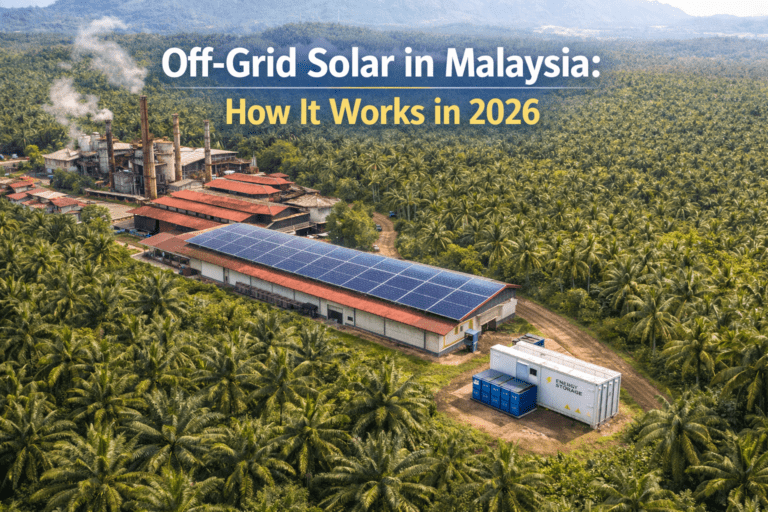
Off-Grid Solar in Malaysia: How It Works in 2026

When Malaysians say “Solar ATAP”, they usually mean an on-grid system connected to the grid. But for certain plantations, remote operations, telecom sites, islands, resorts, chalets, and homes, there’s another route: off-grid solar, a system that runs without connection to the national electricity infrastructure.

Off-grid solar is basically your own mini power station. It combines solar PV System + Battery Energy Storage System (BESS), and in most practical designs, a backup generator for extra reliability.

Here’s how it works in Malaysia in 2026 and why batteries are the heart of the system.


1) What is an off-grid solar system?

An off-grid solar system is a standalone electricity setup that’s not connected to the grid.

Your home/site gets power from three “sources”, depending on the situation:

  • Solar in the day (your main supply)
  • Batteries at night (your stored energy)
  • Generator backup (for long cloudy periods, rain stretches, or sudden high demand)

Because there’s no grid “safety net”, off-grid needs to be sized properly, not just for your daily usage, but also for rainy days and night-time demand.


2) Where off-grid solar is common in Malaysia

Off-grid is most relevant when getting national electricity infrastructure supply is either too costly, too time-consuming to reach, or technically difficult.

Common use cases include:

  • Plantations, farms, and remote operations
    Pulling power lines deep into estates can cost more than a well-designed solar + battery + genset hybrid.
  • Telecom towers and critical equipment
    Often designed as off-grid/hybrid to reduce diesel usage and improve uptime.
  • Remote kampungs, interiors, and islands
    Especially in parts of Sabah and Sarawak, where grid extension can be expensive or not feasible.
  • Eco-resorts and hill chalets
    Some operators also choose off-grid for the “self-sufficient, low-carbon” positioning (and to avoid noisy diesel dependency).


3) Main components you’ll need

A practical off-grid setup usually includes:

  • Solar panels (PV modules)
    Often sized to meet daytime energy needs and to recharge batteries consistently.
  • Battery Energy Storage System(BESS)
    In 2026, lithium batteries are increasingly common due to efficiency and longer lifecycle, and more competitive pricing.
  • Off-grid / hybrid inverter
    Converts DC to AC and manages the flow between solar, battery, and generator input.
  • Backup generator (diesel/petrol)
    The safety net during prolonged bad weather, unusually high demand, or when the battery is low.


4) How it works day to day

Off-grid is simple when you picture it as “solar first, then battery, then generator if needed.”

Daytime
Solar powers your appliances first. Any extra solar charges the battery for use at night or the next day. The battery can also help support extra load during high demand. 

Night
The battery runs your loads through the inverter.

Cloudy / rainy stretch
Solar production drops, so the system relies more on batteries. If the stretch is long (or demand is high), the generator kicks in.


5) Pros, cons, and when it makes sense

Advantages

  • Energy independence: less exposure to outages, tariffs, or grid limitations
  • Power where the grid can’t reach: replaces diesel-only setups and supports rural electrification
  • Lower fuel use: fewer generator hours, less noise, and less maintenance
  • Strong sustainability story: useful for eco-tourism, ESG and remote communities


Considerations

  • High upfront cost: Solar PV Systems + Batteries 
  • Proper system sizing remains important to ensure the solar, battery, and generator can support the required load reliably.
  • System performance based on proper battery management, generator servicing, and load planning.


Off-grid solar + battery if:

  • National grid energy connection is unavailable, unreliable, or too expensive to extend
  • You rely heavily on diesel and want to cut fuel, noise, downtime
  • You run a palm oil mill, farm, plantation, resort, or remote site that needs stable and cleaner power daily.


Thinking of Going Solar + Battery?

Contact TERA to explore trusted installers and financing options tailored to Malaysian businesses.

Got questions? Reach out to us via WhatsApp at +60-197502386 or email us at [email protected] to kick-start your solar journey.


You May Also Find This Helpful :

Battery Energy Storage System (BESS): Storing potential for a greener future

Everything you need to know about EV Wall Box

Solar resilience: how the sun keeps us powered when everything else fails

How solar, batteries, and smart systems work together

How climate and weather patterns affect solar power in Malaysia

On-Grid Solar in Malaysia: How It Works in 2026


Thinking of going solar?

Let our specialists assess your energy needs and recommend the ideal solution. Simply share your details, and our team will be in-touch shortly.