
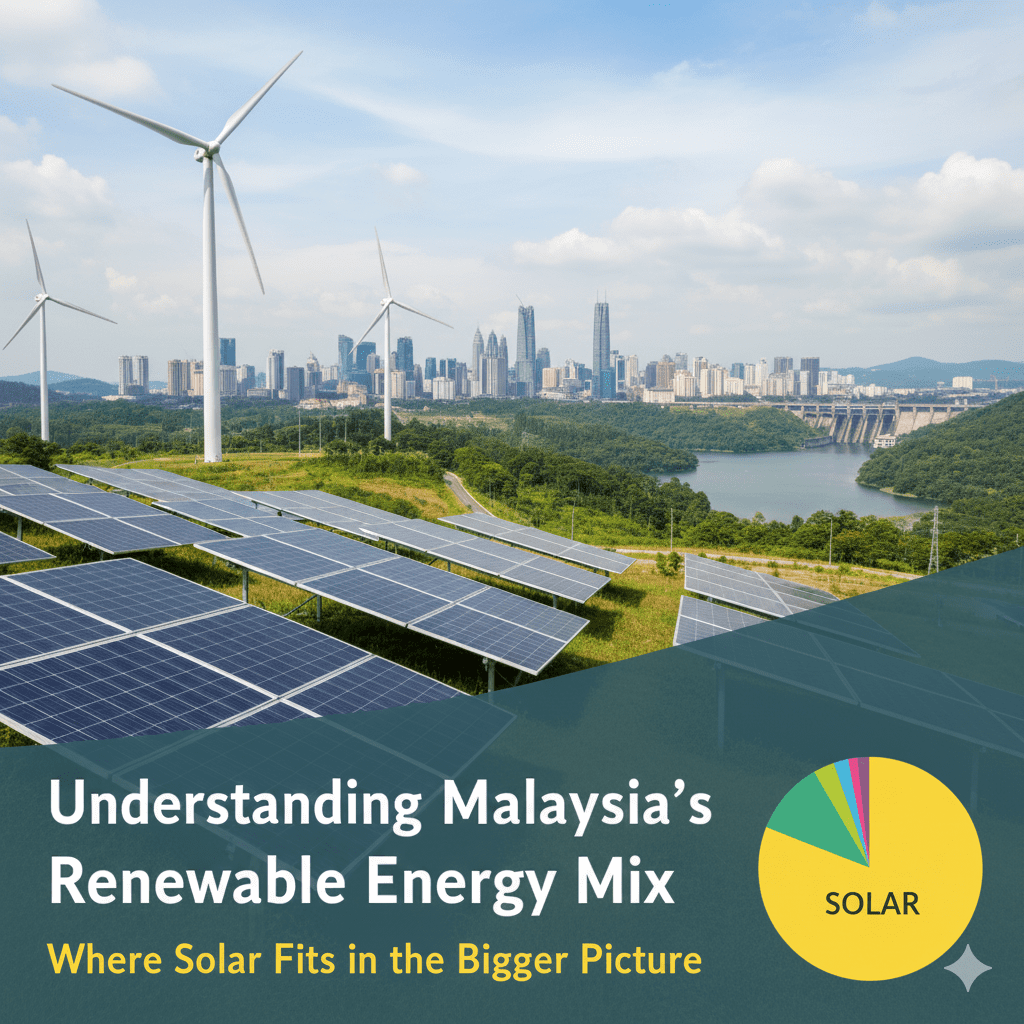
When you switch on a light or charge your phone, it’s easy to forget where that electricity comes from. In Malaysia, the answer is still mainly fossil fuels. Coal and natural gas together produce about 81% of the country’s power, while renewables make up only 19.
Within that renewable share, hydropower dominates about 16–18% of the total mix, while solar and wind combined make up just around 2% This is striking, given Malaysia’s consistently sunny climate.
However, with the right solar and battery usage, households and businesses can save nearly up to 100% of electricity with the right battery and solar size.
Malaysia isn’t standing still. Under the National Energy Transition Roadmap (NETR), the country has set ambitious long-term targets to shift its power sector towards cleaner sources. The roadmap outlines a national push toward:
These numbers matter because Malaysia is one of Southeast Asia’s largest energy consumers, and national electricity demand is projected to double by 2050. Without a clean transition, the country faces rising carbon emissions, heavier dependence on imported coal and gas, and vulnerability to global fuel price volatility.
Hydropower has been Malaysia’s renewable workhorse, but it has clear limits. You can only build so many dams before running into ecological and geographical barriers. Solar, on the other hand, is:
Globally, solar is now the fastest-growing energy source. Neighbouring Vietnam installed over 16 GW of solar in just three years (2018–2020), showing how quickly the technology can scale. Malaysia has the same potential, but progress has been slower due to policy hurdles and subsidies that still favour fossil fuels.
Even with all its promise, solar can’t flourish without systemic fixes:
A resilient energy mix will need balance:
If Malaysia hits its targets, solar could transform from today’s 2% contribution into the primary driver of renewable growth by 2050.
This isn’t just about megawatts and targets. A cleaner, solar-powered future touches everyone:
Malaysia’s electricity mix is still dominated by fossil fuels, but the shift has begun. Hydropower built the base, but solar is the game-changer – scalable, affordable, and perfectly suited to Malaysia’s climate.
The real question isn’t whether solar will grow, but how quickly Malaysia can remove the barriers in its way.
Visit the TERA website to explore trusted installers and financing options tailored to Malaysian homeowners and businesses.
Got questions? Reach out via WhatsApp at +60-197502386 or email [email protected] to start your solar journey today.
You May Also Find This Helpful :
What Budget Malaysia 2025 Means for Renewable Energy
Malaysia’s Roadmap to Achieving Renewable Energy Goals with Solar Power
CRESS Enhancements Open Doors for Renewable Energy in Malaysia
The Rise of Solar Farms in Malaysia: A Bright Future for Renewable Energy
GET-ting to a Greener Future: Powering Malaysia’s Renewable Revolution
Levelised cost of energy (LCOE) explained: why solar is becoming the cheapest power source
Let our specialists assess your energy needs and recommend the ideal solution. Simply share your details, and our team will be in-touch shortly.