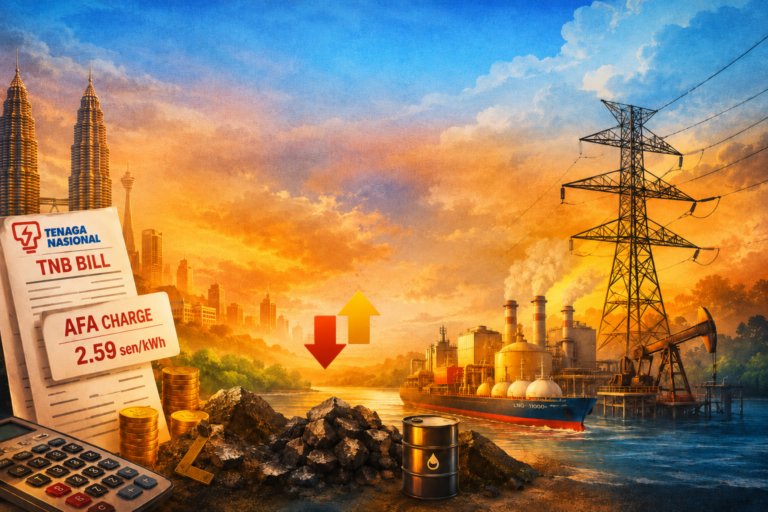
If you have been checking your TNB bill more closely, you may have noticed a term called AFA, which stands for Automatic Fuel Adjustment.
This was introduced as part of Malaysia’s new electricity tariff structure under Regulatory Period 4 (RP4), which took effect on 1 July 2025. According to Suruhanjaya Tenaga (ST), AFA replaced the previous ICPT mechanism and allows fuel-related generation costs to be adjusted automatically based on current fuel prices and foreign exchange movements, with updates reported monthly.
In simple terms, AFA is a way to reflect the real cost of generating electricity.
Here’s the basic idea:
Because of that, AFA helps adjust part of the bill based on actual market conditions instead of relying only on older estimates. ST says this new mechanism is more dynamic because it automatically tracks current fuel prices and exchange rate movements.
AFA was introduced to make electricity pricing more transparent while aligning it more closely with actual fuel and currency cost changes.
Since these costs can rise or fall over time, the new mechanism allows adjustments to be made more regularly. This helps consumers understand why their electricity bills may change from month to month.
Not necessarily.
This is where many people get confused. AFA is not automatically a surcharge. TNB states that the AFA charge can be in the form of either a rebate or a surcharge, depending on actual conditions.
A good example is the latest update for June 2026:
That means AFA was still a rebate in April, but the latest update for June 2026 shows that AFA has changed to a surcharge of +2.59 sen/kWh. This means affected users will now see an additional AFA charge instead of a rebate from May 2026.
Based on TNB’s FAQ:
That means having solar does not automatically remove AFA from your bill. If you still import electricity from the grid, AFA may still apply.
The biggest takeaway is this: AFA may be outside your control, but your electricity usage is not.
For homes and businesses with higher electricity usage, changes in fuel-related costs can have more impact. That is why energy efficiency, smarter usage habits, and reducing unnecessary grid dependence matter even more under the new tariff structure. This is a practical inference from how ST and TNB describe AFA’s link to imported electricity and fuel-cost adjustments.
AFA is a billing mechanism that reflects actual fuel and currency costs in electricity generation. Once you understand how it works, your TNB bill becomes easier to read and easier to manage.
Speak to TERA to find the right solution for your home, energy usage, and long-term savings goals.
Got questions? Reach out to us via WhatsApp at +60-197502386 or email us at [email protected] to kick-start your solar journey.
You May Also Find This Helpful :
How solar energy is changing the way we design homes
From Sunlight to Your Socket: The Simple Journey of Solar Energy
Understanding Solar Panel Costs in Malaysia
Considering owning a solar panel for your house? Here’s what you need to know
Solar panels in Malaysia: Top 5 questions answered for homeowners
Let our specialists assess your energy needs and recommend the ideal solution. Simply share your details, and our team will be in-touch shortly.