Why maintenance matters
Malaysia’s tropical climate is perfect for solar – with sunshine averaging 4–6 kWh/m² per day across the year (SEDA Malaysia). This is why solar is one of the fastest-growing renewable sources here.
But heat, humidity, heavy rainfall, and haze also bring challenges. Without proper upkeep, dust, algae growth, and corrosion can reduce performance. Regular maintenance ensures your system remains efficient for 25 years or more, helping you get the most out of incentives like Net Energy Metering (NEM) and Solar ATAP.
Basic maintenance tasks in Malaysia
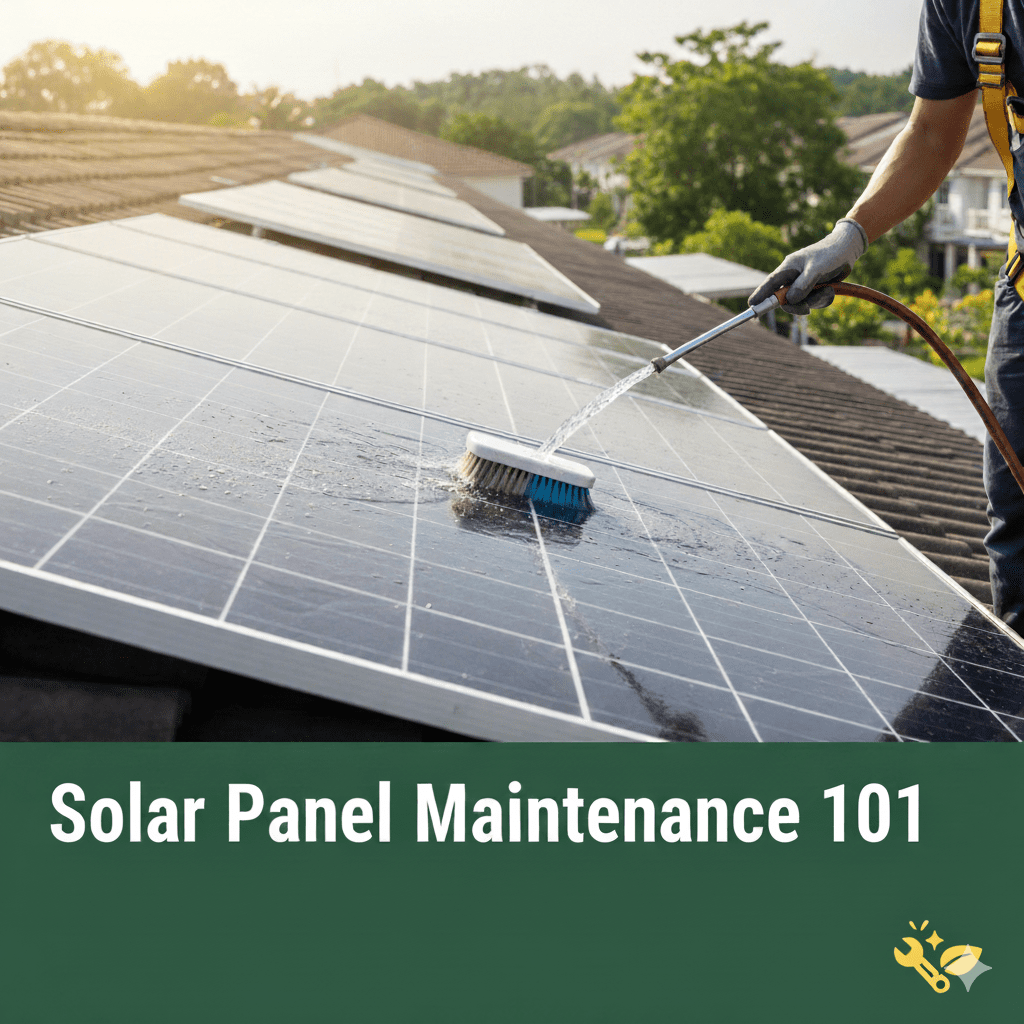
- Cleaning: In Malaysia’s humid climate, dust, bird droppings, and even moss can accumulate faster than in temperate countries. Clean panels every 3–6 months depending on your location (more often in urban or industrial zones with high pollution).
- Inspection: Check wiring, inverters, and mounting for corrosion or looseness caused by frequent rain and humidity.
- Monitoring: Use apps or monitoring tools to track daily output. A sudden drop in generation could mean shading, inverter issues, or dirt buildup.
Energy storage and grid reliance in Malaysia
With Malaysia’s electricity tariffs expected to rise as subsidies are slowly phased out (The Star), pairing solar with storage is a strong strategy:
- Store excess solar power: Use it at night instead of drawing from Tenaga Nasional Berhad (TNB).
- Cut reliance on the grid: Reduce exposure to tariff hikes and grid disruptions.
- Future-proof your investment: With Malaysia’s push for smart grids, battery-backed solar will play a big role in energy security.
Maximising ROI in the Malaysian context
- Leverage government schemes: Net Energy Metering (NEM) allows you to offset bills by exporting excess energy back to the grid (SEDA Malaysia).
- Quality equipment: High humidity can shorten the lifespan of cheaper panels. Invest in Tier 1 panels and quality inverters.
- Regular O&M contracts: Many Malaysian solar providers offer annual maintenance packages — worth it for commercial systems where downtime means big losses.
Challenges unique to Malaysia
- Monsoon rains and storms: Can dislodge poorly mounted systems or damage wiring.
- Haze season: In certain months, haze reduces output — cleaning afterward is crucial.
- Subsidised fossil fuel prices: Solar ROI is improving, but subsidies for gas and coal mean competition is still uneven.
What this means for households and businesses
- Homeowners: With proper maintenance, a rooftop system can pay for itself in 7–9 years and generate savings for another 15+ years.
- Businesses: Rooftop solar plus storage cuts operating costs and signals ESG (environmental, social, governance) leadership to investors.
- Both: A well-maintained solar+storage setup builds resilience against tariff hikes and future energy policy shifts.
Malaysia has one of the best climates for solar, but also one of the most demanding for system upkeep. With regular cleaning, inspections, and smart storage, your solar panels can stay efficient for 25+ years, delivering strong returns and protecting you from rising grid costs.
Additionally, with the right solar and battery sizing, both home owners and businesses can achieve up to 100% of electricity savings.
Thinking of going solar?
Visit the TERA website to explore trusted installers and financing options tailored to Malaysian homeowners and businesses.
Got questions? Reach out via WhatsApp at +60-197502386 or email [email protected] to start your solar journey today.
You May Also Find This Helpful :
A Step-by-Step Guide to Installing Solar Panels in Malaysia with TERA
How Solar Panels Work: Turning Sunlight into Power for Your Home or Business
Solar panels in Malaysia: Top 5 questions answered for homeowners
From Sunlight to Your Socket: The Simple Journey of Solar Energy
How climate and weather patterns affect solar power in Malaysia
On-Grid Solar in Malaysia: How It Works in 2026